 888-213-4711
Air Compressor Noise Reduction

eNoise Control offers a proven engineered solution for air compressor noise control with a sound curtain enclosure constructed of Model UNC-25 Sound Curtain Panels and support frame custom designed and fabricated to meet your application requirements. Other needs can be met with various compressor sound blankets designed specifically for your use.
- Sound reduction of 12 – 18 dBA
- Silenced passive or forced air ventilation available
- Easy access to the equipment
- Enclosure easily installed and moved with equipment
- Class A (or 1) flammability rated per ASTM E84
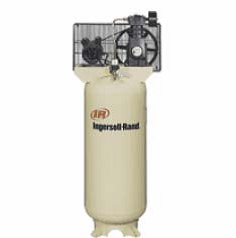 Problem:
A shop air compressor located in a corner or against an adjacent wall with constant or intermittant motor and compressed air noise emanating from the compressor. The noise levels are compounded by the sound reflecting off these walls. When the air compressor cycles, the noise becomes a nuisance to personnel in the area.
Solution:
An enclosure made of Model UNC-25 sound curtain panels surrounding the air compressor. These enclosures are typically two, three, or four-sided (and of sufficient height) with an open top. Optional roof and silenced ventilation options are available depending on the application. The video below shows an installation of a similar sound curtain enclosure around a compressor.
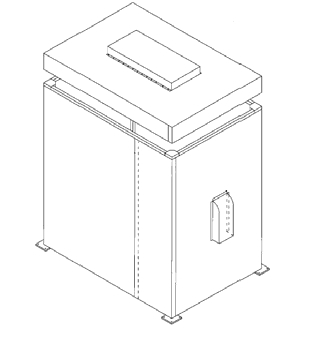
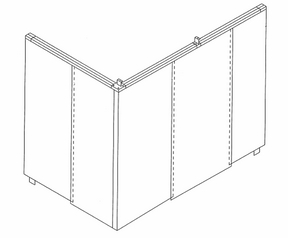
The illustrations shown below are: (on the left) a four-sided enclosure with roof and silenced ventilation, (on the right) a two-sided enclosure using sound curtain panels.
| OCTAVE BAND FREQUENCIES (Hz) | |||||||
|---|---|---|---|---|---|---|---|
| Product | 125 | 250 | 500 | 1000 | 2000 | 4000 | STC |
| UNC-25 | 12 | 16 | 27 | 40 | 44 | 43 | 29 |
| OCTAVE BAND FREQUENCIES (Hz) | |||||||
|---|---|---|---|---|---|---|---|
| Product | 125 | 250 | 500 | 1000 | 2000 | 4000 | NRC |
| UNC-25 | .19 | .99 | .96 | .80 | .57 | .33 | .85 |
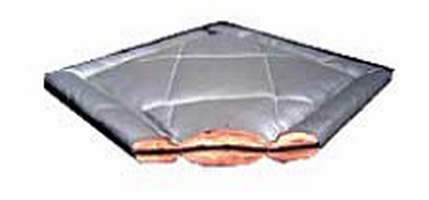
Air Compressor Enclosure Sample Material

